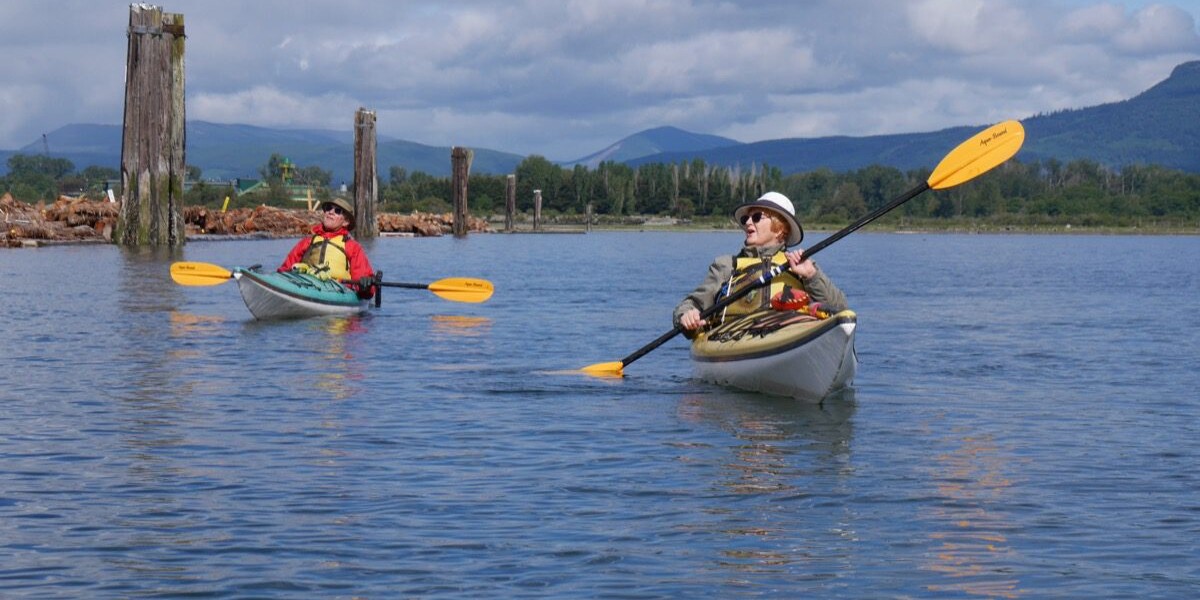
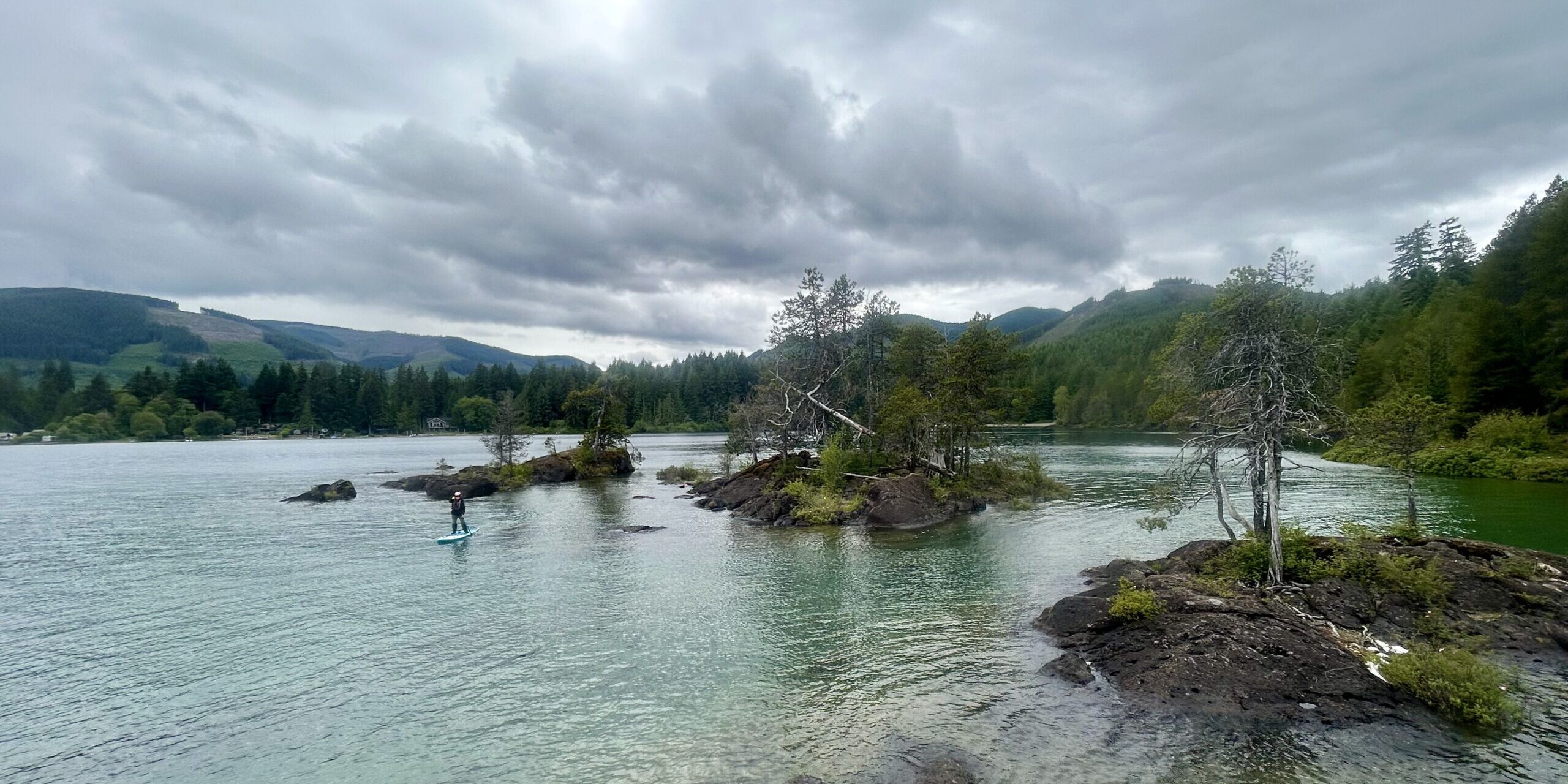



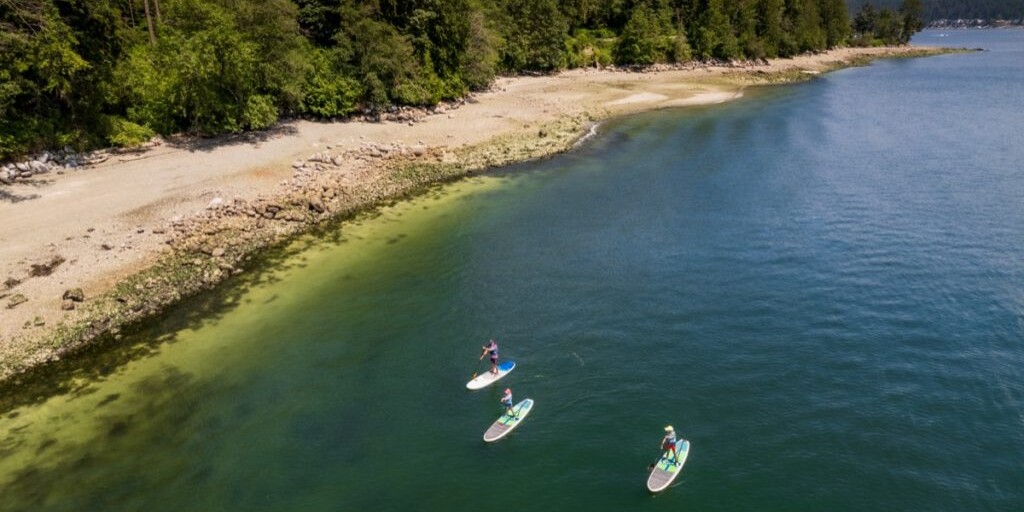
Northern Vancouver Island is one of British Columbia’s most awe-inspiring sea-kayaking regions, a place where deep green forests meet swirling currents and a maze of wild islands. From the sweeping waters of Johnstone Strait to the quiet coves of Broughton Archipelago Marine Provincial Park, this corner of the coast offers some of the richest marine life in the world.
As longtime guide and owner of Spirit of the West Adventures Rick Snowdon explains, “the main draw of the area, other than scenery, is wildlife.” He then goes on to state that while the larger fauna such as whales and dolphins are a big draw, “the whole area is rich with intertidal life. I always encourage people to take in the intertidal wonders beneath them as well as the larger animals.”
For Andrea Mandel-Campbell, founder of Karibu Adventures, the magic of this region is just as profound. “Every time you go, there’s always something that blows your mind,” she says, recalling moments where orca, humpbacks, and dolphins all appeared together in swirling currents near Hanson Island.
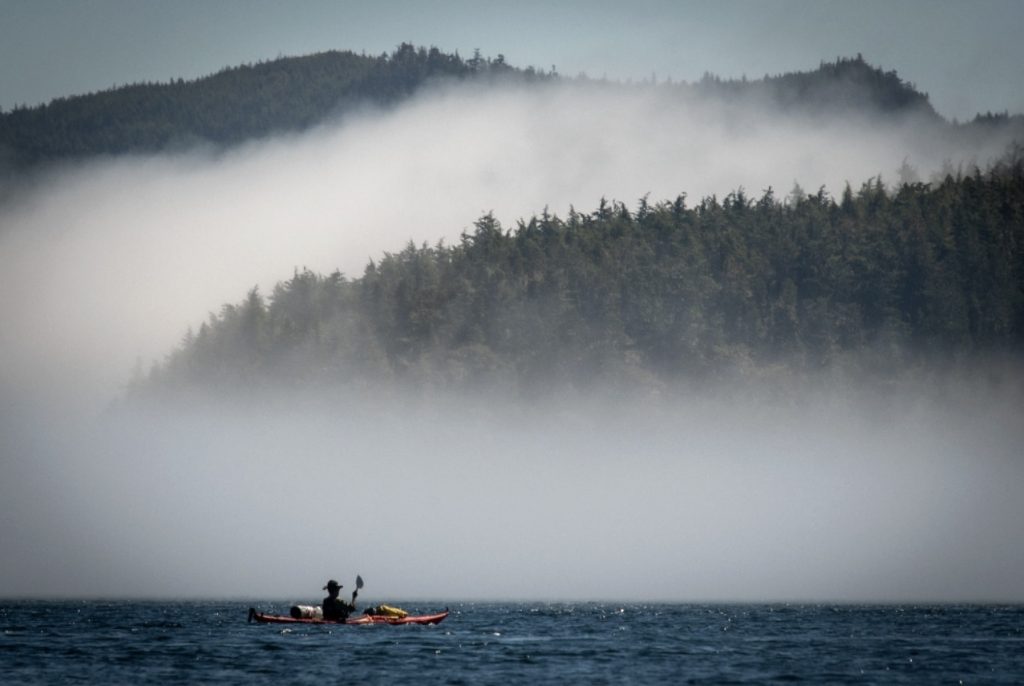
Summer and early fall are the ideal times to explore this region because of the good weather and exceptional wildlife viewing. July and August bring the return of both resident and Bigg’s orca, huge numbers of humpbacks, sea lions, dolphins, and, more recently, thriving populations of sea otters. Fog often settles in through August and early September, adding both beauty and challenge. Because of the mix of fog, tidal flows, boat traffic, and major crossings, beginner and intermediate paddlers should strongly consider hiring a local outfitter, as navigating this wild coastline requires knowledge of weather systems, tides, marine forecasts, and safe crossing protocols. Below are five mind-blowing sea kayaking trips around Vancouver Island North that experts such as Rick and Andrea recommend.
1. Telegraph Cove to the Blackfish Sound Loop
Best for: wildlife lovers, first-timers with a guide, multi-day explorers
Telegraph Cove is the most popular starting point for east-side trips, offering instant access to Johnstone Strait. From here, paddle north toward the mouth of Blackfish Sound—one of the most reliable places in BC to spot humpbacks, orcas, and Pacific white-sided dolphins. Andrea Mandel-Campbell describes the area as “almost a predictable place to sight whales,” thanks to the convergence of currents and nutrient-rich waters.
Camp along the shoreline near Hanson Island and spend your days exploring tight island passages, kelp forests, and quiet beaches. Depending on conditions, loop back via Weynton Passage, watching for eagles, seals, and otters along the way. This trip combines accessibility with world-class wildlife viewing, making it ideal for paddlers joining a guided tour.
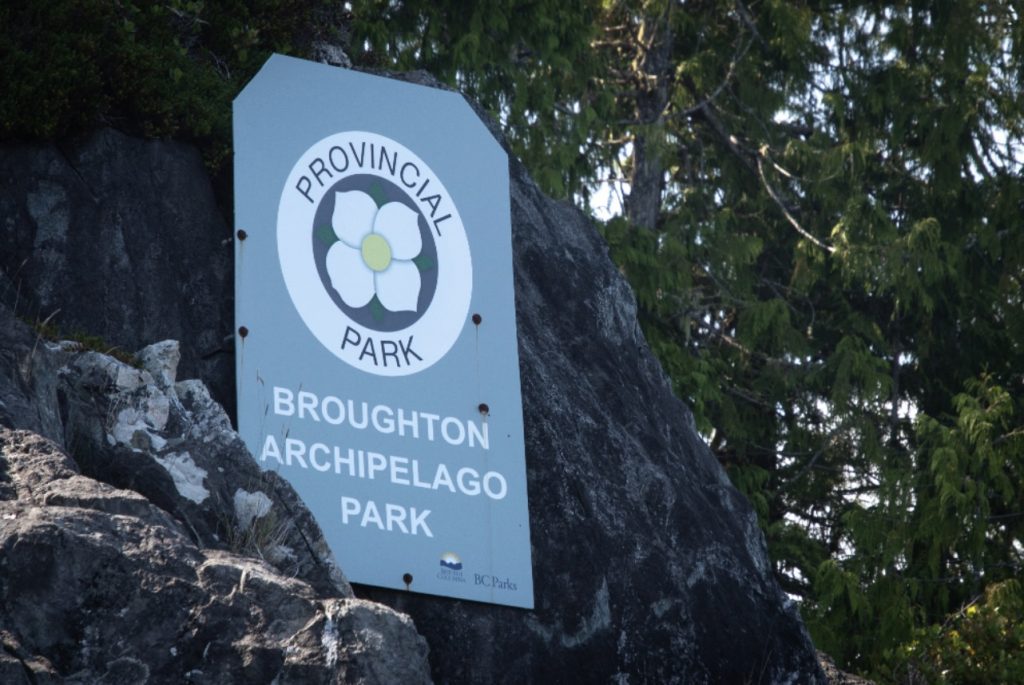
2. Alder Bay to the Broughton Archipelago
Best for: scenic island-hopping, cultural interpretation, beginner-friendly with guidance
Launching from Alder Bay lets you skirt the Vancouver Island shoreline before making the three-kilometre crossing toward the Broughtons. The fact the crossing is so long is one reason why many outfitters ferry paddlers across by water taxi. Once inside the archipelago, the paddling becomes calmer, more intricate, and endlessly rewarding.
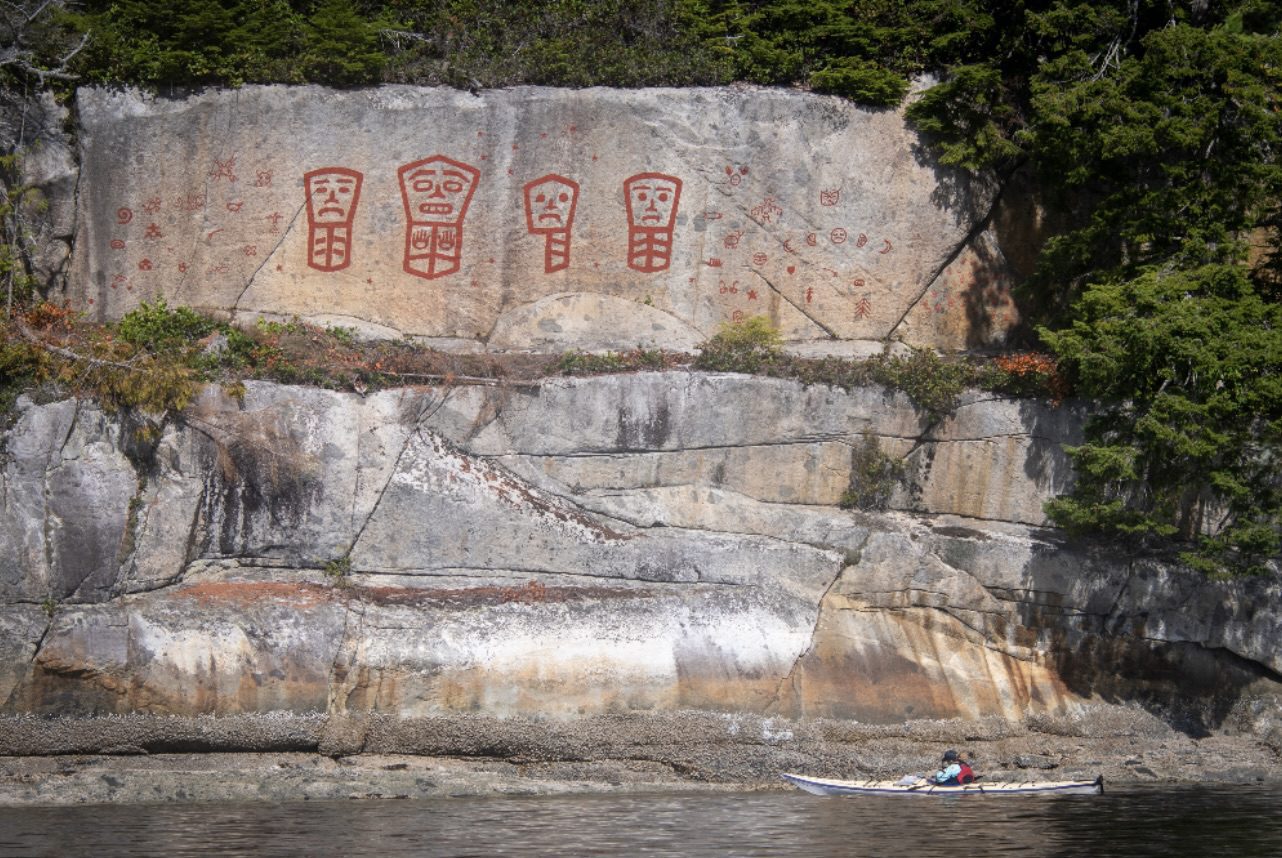
The Broughtons are a labyrinth of islets, narrow channels, and sheltered coves, full of intertidal life and perfect for slow exploration. Many outfitters partner with local Indigenous communities, offering visitors a chance to learn about the rich Kwakwaka’wakw cultural heritage of the region. Andrea notes that paddling here with Indigenous partners is “unbelievable. It’s a story that has hope and people who are strong and clear on where they’re going.” Aside from incredible cultural experiences, you can expect to see otters, sea stars, minks, and maybe even the occasional wolf swimming between islands.
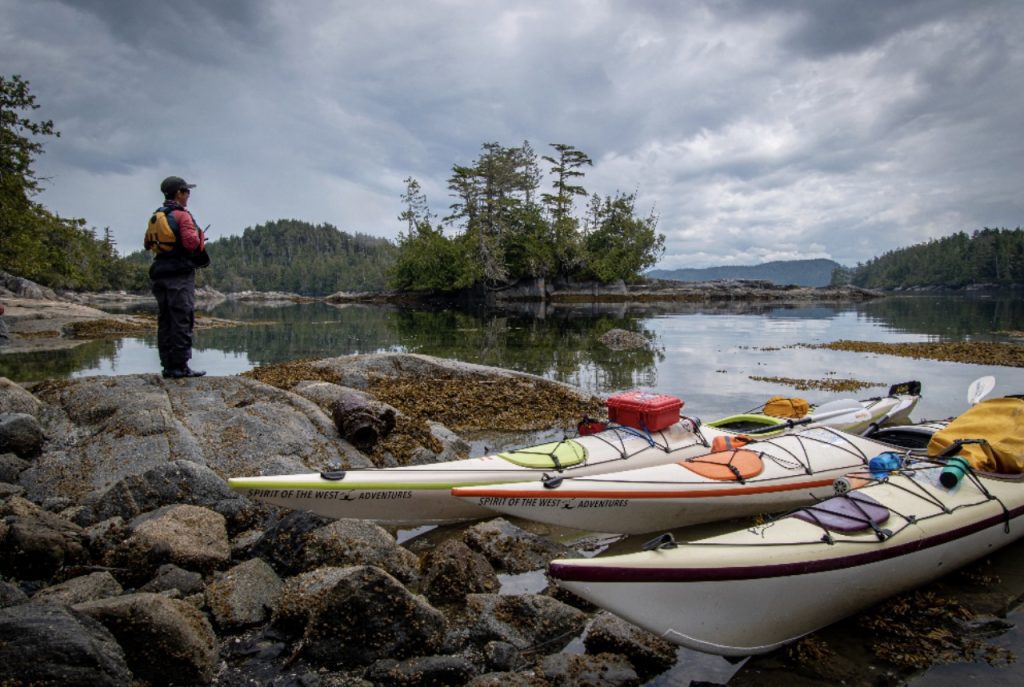
3. Blackfish Sound to Robson Bight
Best for: peak-season whale encounters, experienced beginners with a guide
For paddlers seeking the iconic Johnstone Strait experience, this route travels along one of the most storied coastlines in the world where whale research made its mark. Begin near Blackfish Sound and travel southeast toward Hanson Island. The southeast corner of the island, which is home to the famous OrcaLab, has long been a hotspot for acoustic whale research. From there, continue down Johnstone Strait toward Robson Bight, famed for its orca rubbing beaches where the large mammals rub up against the shoreline for reasons as yet unexplained.
Andrea recalls a moment near Hanson Island when two pods of orca, four humpbacks, and a huge pod of dolphins all appeared at once, circling in the currents as paddlers watched for over an hour. “It was out of this world,” she says. Such encounters aren’t guaranteed, but this area consistently delivers some of the best wildlife viewing in British Columbia.
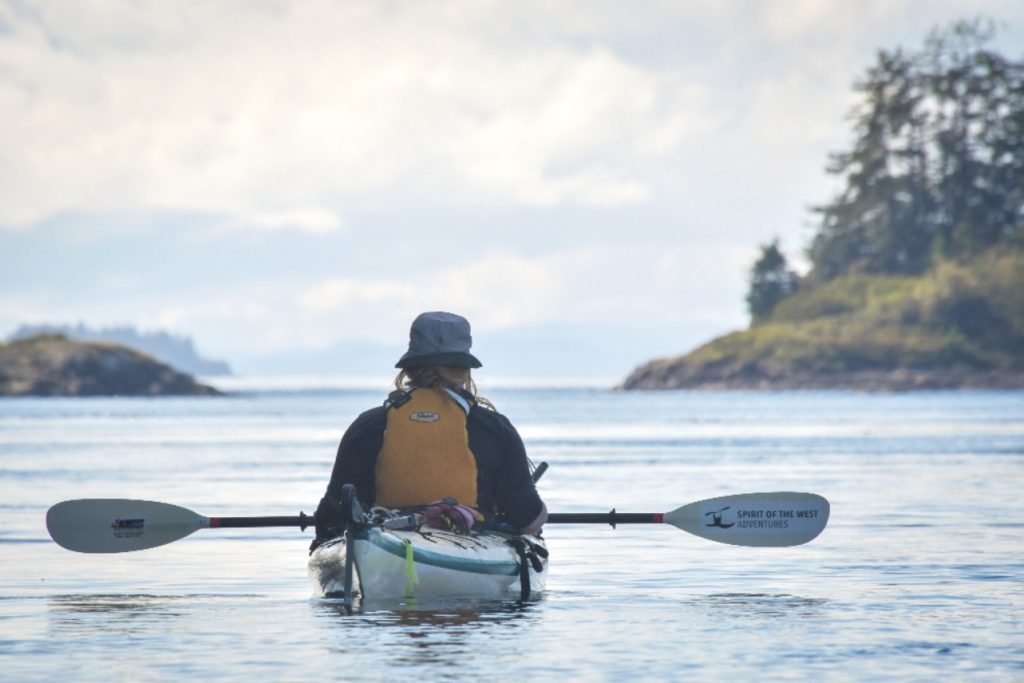
4. Sedge Islands and the Western Edge of the Broughtons
Best for: intermediate paddlers, navigation practice, fewer crowds
For a quieter Broughtons experience, set your sights on the western outer edge of the archipelago. Rick highlights the Sedge Islands on the west side of Bonwick Island, which boast tight, rocky passages. It’s one of his favourite paddling areas anywhere.
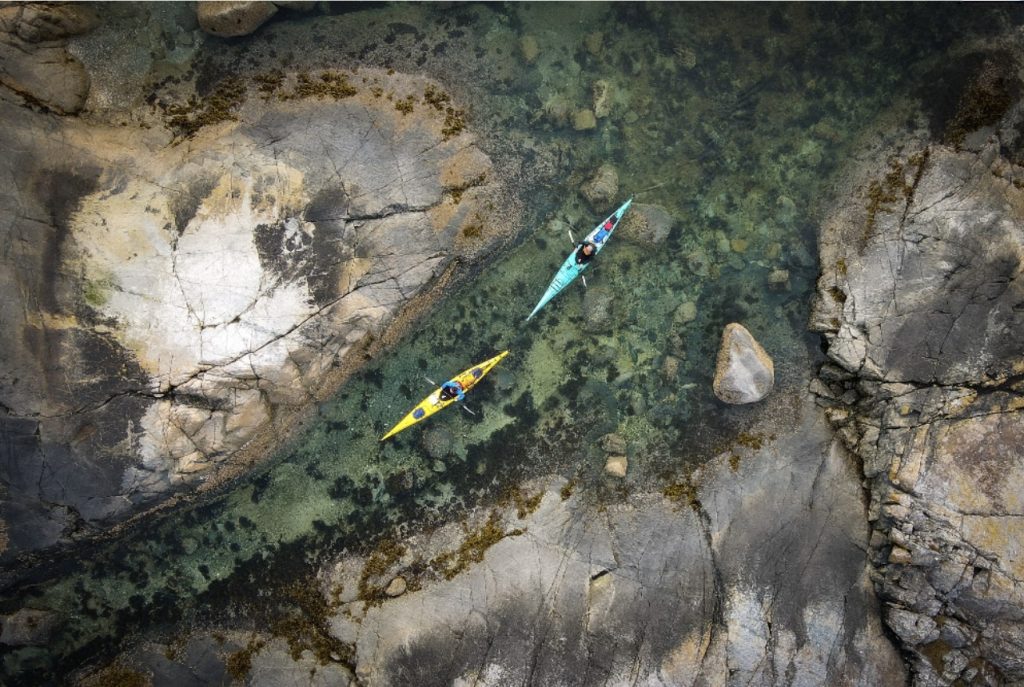
Here, you’ll feel the shift toward open water while still enjoying manageable conditions. The maze-like islets offer perfect opportunities to practice navigation, especially in fog, and wildlife sightings can be exceptional. Expect everything from minks and otters to unusual intertidal species revealed during low tides. This route is slightly more exposed than inner-archipelago routes, so comfort with currents and wind is helpful.
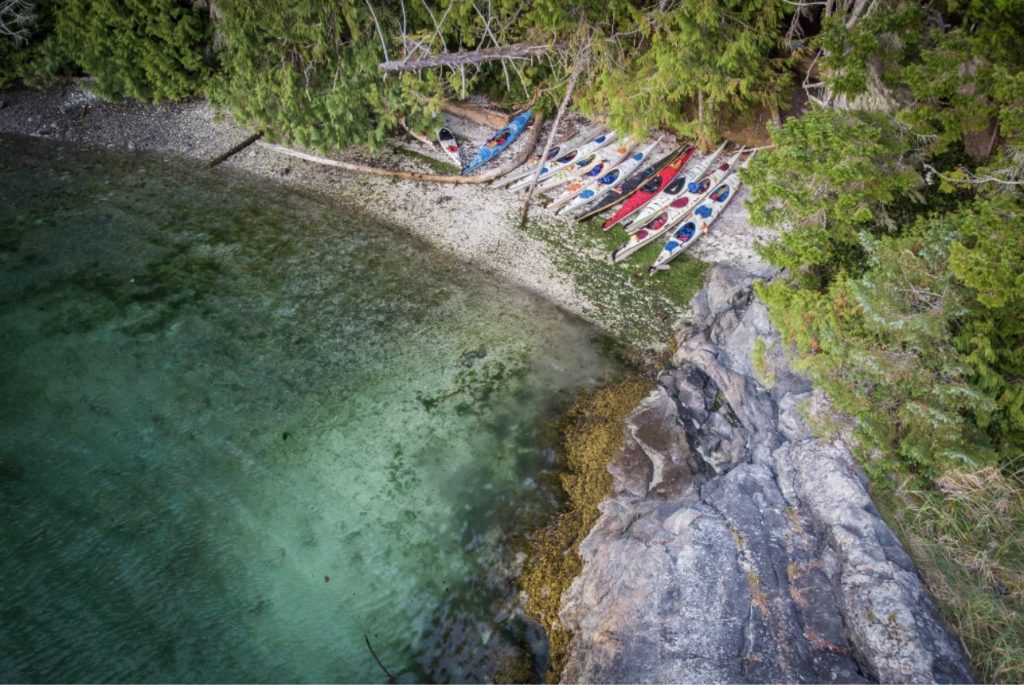
5. The Cape Scott Marine Trail (Port Hardy to Coal Harbour/Quatsino Sound)
Best for: expert paddlers seeking a true outer-coast expedition
For an unforgettable but demanding adventure, the Cape Scott Marine Trail delivers a full taste of the Pacific’s raw power. Spanning approximately 177 kilometres, this route typically takes about 14 days and is rated Class 4, meaning only highly experienced sea kayakers should attempt it. The trail can be paddled counterclockwise from Port Hardy to take advantage of prevailing northwesterly winds, or west-to-east with a launch from Coal Harbour.
The coastline here is dramatic and varied: towering cliffs, wave-battered headlands, expansive white-sand beaches like Shuttleworth Bight, and remote surf beaches such as San Josef Bay and Nels Bight. In between, small islands, sea stacks, and rocky reefs make every day an adventure but they also demand constant vigilance, strong navigation skills, and careful tidal and weather planning. As Rick notes, “you’ve got no option but to go around the outer coast area” where you’ll face large swells, limited landing zones and the occasional surf landing.
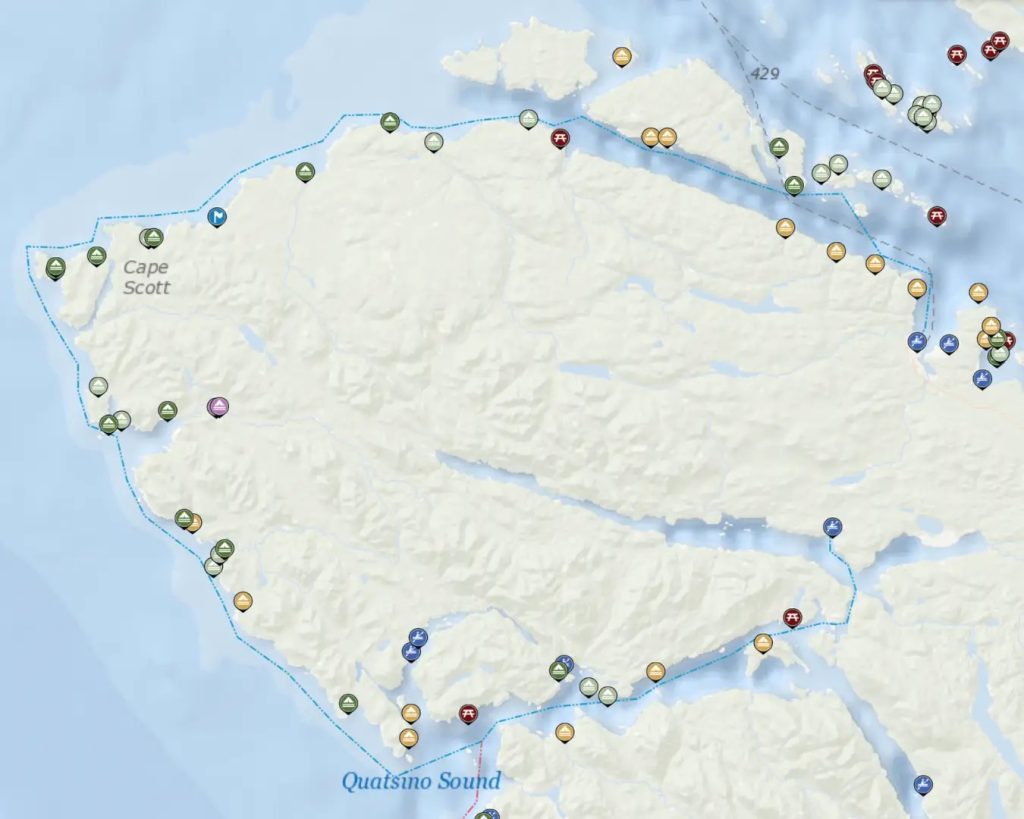
Wildlife is abundant here though: sea lions and sea otters are regular visitors, and the marine highway sometimes brings whales or transient orcas into view. Many of the trail’s 46 designated campsites link with sections of the North Coast Trail, making this one of the most spectacular combined paddle-and-hike routes in the province.
Because of its exposure, remoteness, and commitment, this route should only be attempted by paddlers with substantial outer-coast experience, excellent planning skills, and a flexible, safety-first mindset.