




Day 1: Arrival and Exploration
Earlier this summer we received an invitation to paddle the waters and enjoy the craft beers in the coastal community of Kitimat, British Columbia, located a three-hour drive from where we live in Smithers. We immediately jumped at the chance. After all, we’re avid paddlers who regularly play in Bulkley Valley whitewater in kayaks and on paddleboards, but we had never made the trip to the coast to enjoy its saltwater offerings.
During our drive we shared notes about what we knew of Kitimat and the area. The Haisla Nation have lived here since time immemorial, while the town of Kitimat is very young; it was established in the 1950s as an industrial epicentre where an aluminum smelter was constructed and, recently, a natural gas processing plant. In the surrounding temperate rainforests are multiple hot springs, waterfalls, and a river system that boasts a prolific salmon run of five different species. We had planned a four-day trip but it was obvious we were only going to scratch the surface of what this place had to offer.
Kitimat Visitor Centre & Chamber of Commerce
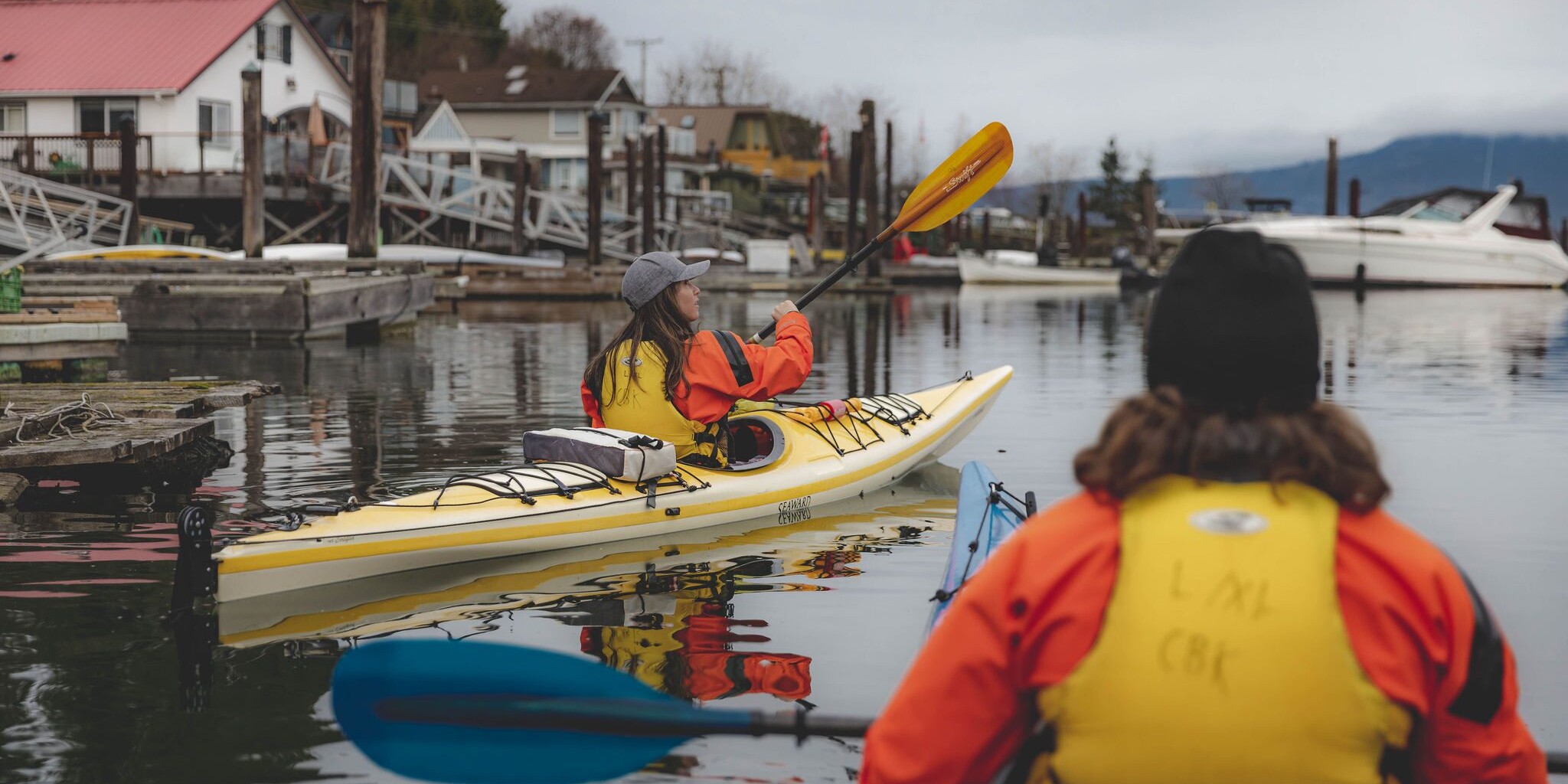
Our first stop in late afternoon was to the Visitor’s Information Centre where we met Laurel and Mercedes, who offered maps and intel about the area and rented us sea kayaks, paddleboards and all the accompanying safety equipment.
Minette Bay
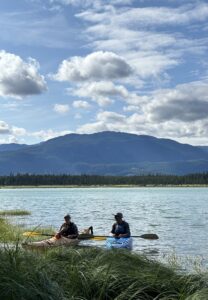
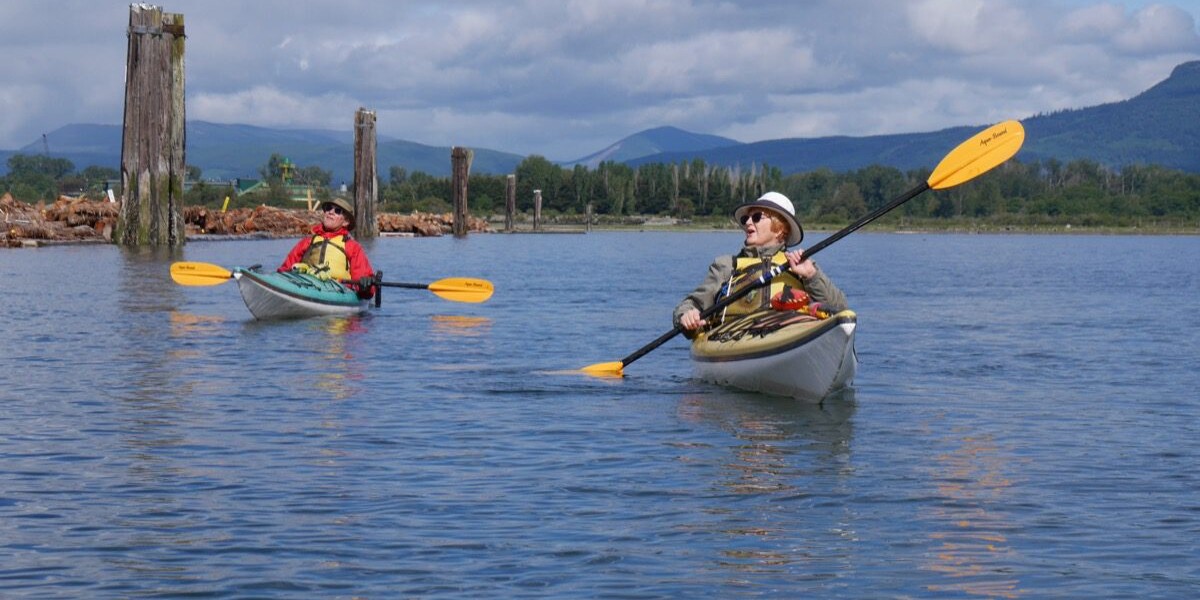
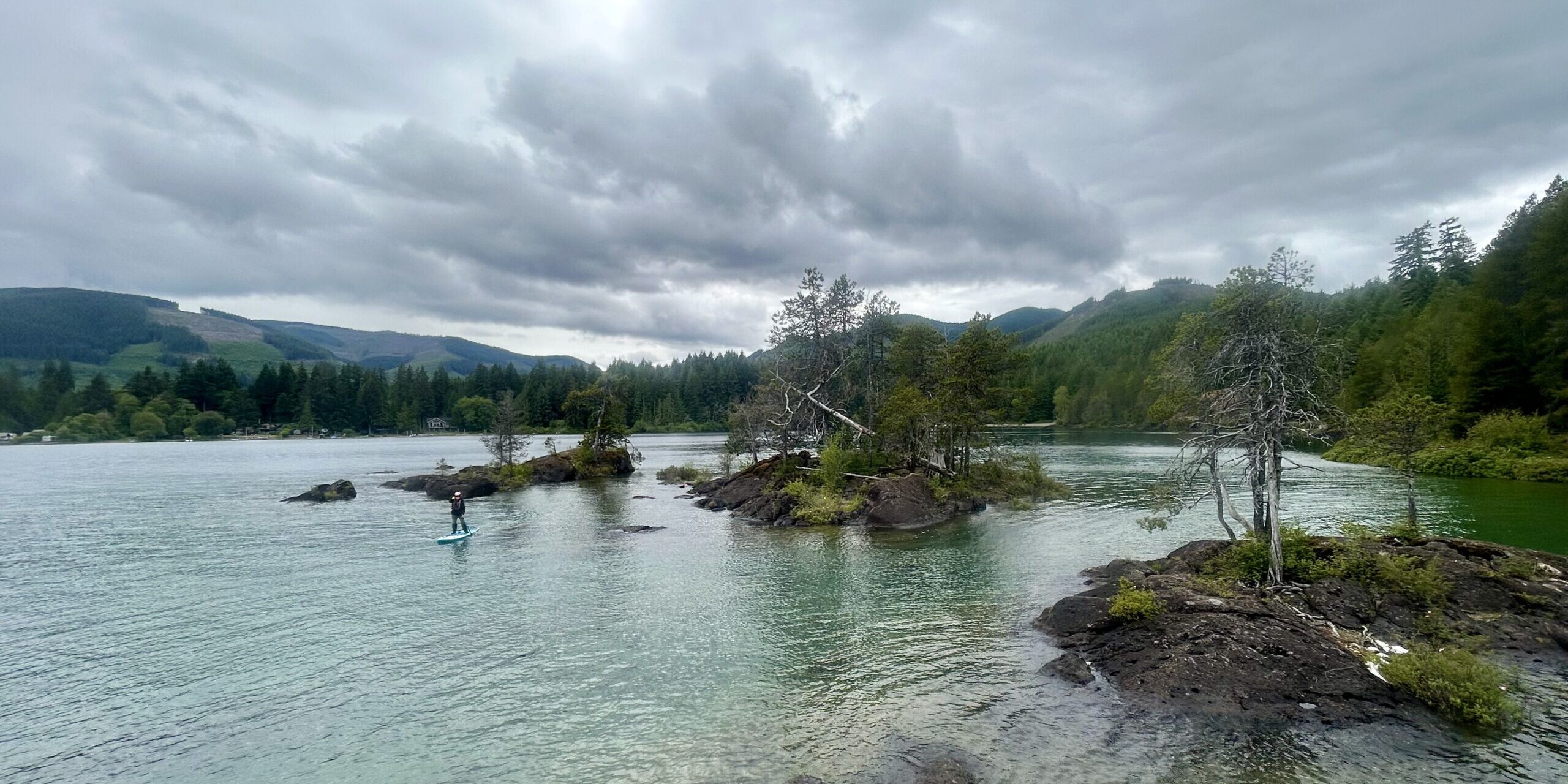
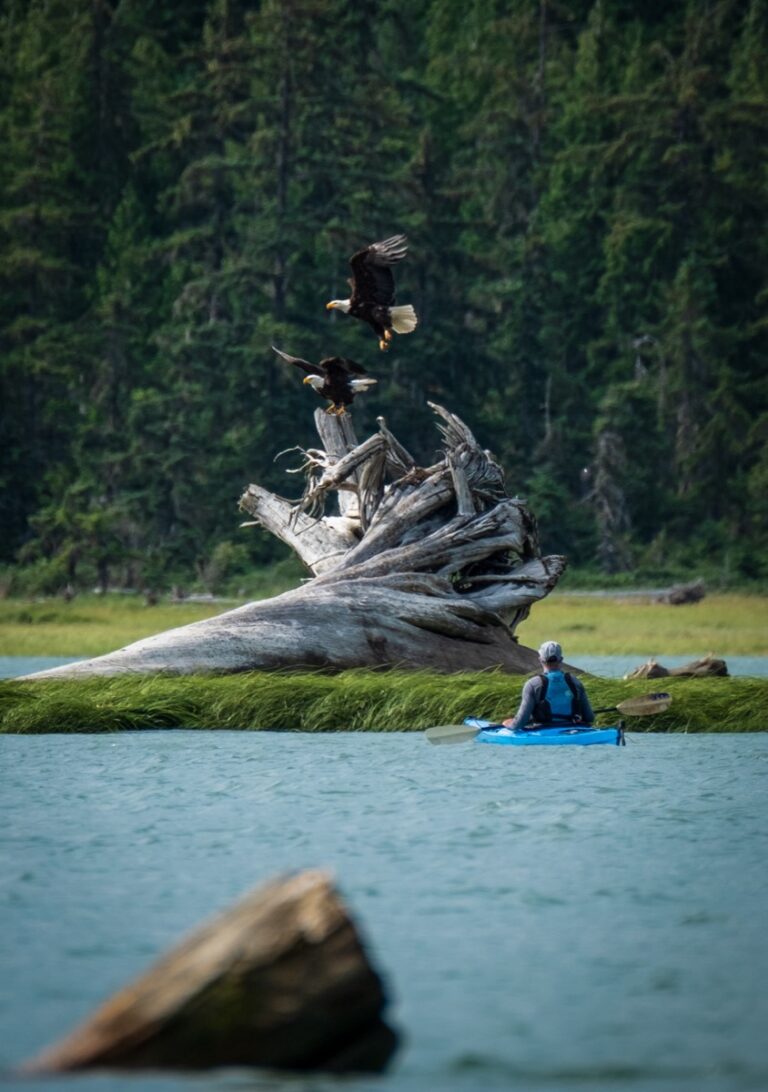
Minette Bay is a quiet gem, offering the perfect introduction to Kitimat’s wild beauty. Sheltered from the winds of the Douglas Channel, its calm, green waters weave through a maze of marshy inlets—ideal for easy exploration. We paddled past half-sunken stumps where bald eagles perched overhead, while kingfishers, red-winged blackbirds, and gulls filled the air with motion and sound. Harbor seals peeked at us curiously before vanishing with a splash, and small fish broke the surface with soft “bloops.” With no wind but a ripple, and wildlife all around, Minette Bay felt like a secret sanctuary
Two Peaks Brewing

Our après-paddle stop didn’t disappoint. Two Peaks Brewery, named after the twin peaks of Mount Elizabeth, is downtown Kitimat’s go-to hangout. With ten taps of small-batch beer, a sunny patio, a beach volleyball net, and even beer golf, it’s easy to stay awhile. We grabbed tasting flights and swapped paddling stories between sips and games. Open just over a year, and already a local favourite hangout.
Kitimat Lodge
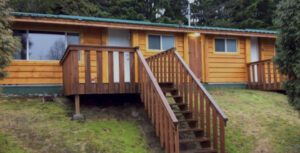
At the end of the evening we pulled up to Kitimat Lodge for our stay, where we chatted with one of the local staff on site and got some local info about the area and our plans.
Day 2: River Paddle and Overnighter
We started the day with coffee on the deck outside of our room, surrounded by cedar and hemlock, already feeling the summer heat. With time before our marina departure, we grabbed our paddleboards and made our way to the Kitimat River.
Kitimat River Paddle (Lower Bridge to Lower Dyke)
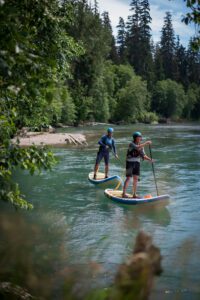
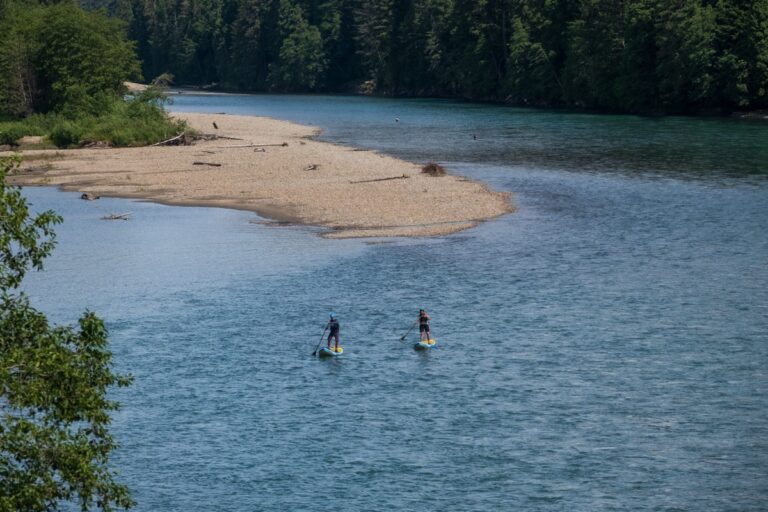
We launched just upstream of the lower bridge for a mellow Class II ride.In shorts, PFDs, and helmets—no thermal gear needed—we floated through cool glacial waters under a blazing sun. Despite satellite maps hinting at industry, we were surrounded by towering trees, gravel bars, anglers, drift boats, and locals cooling off. A perfect mix of nature and community.
Jesse Falls
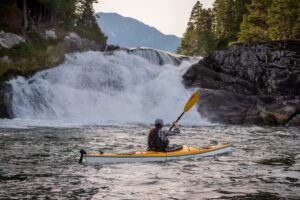
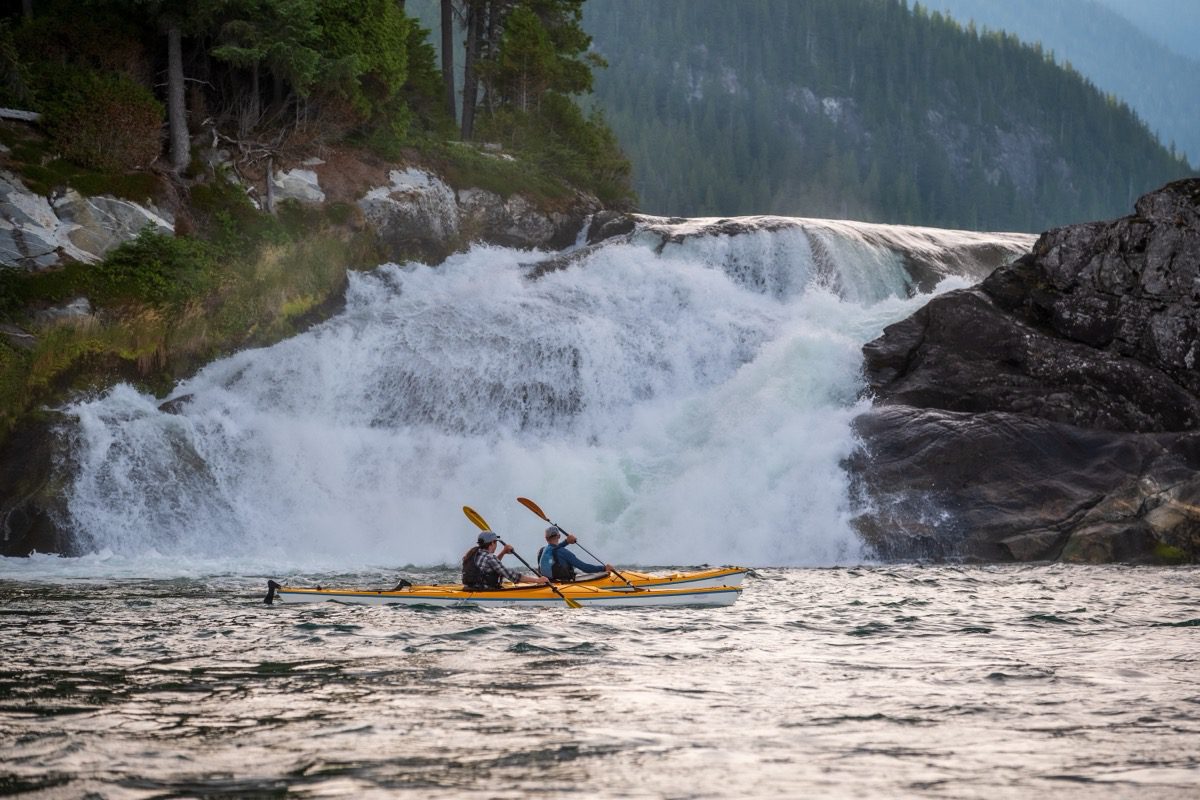
We hired a boat to shuttle us—and our fully loaded kayaks—out to Jessie Falls, with thoughts of possibly camping nearby. The boat ride itself was half the adventure, offering stunning views as we approached the falls from a distance.At first, the waterfall appeared as a slender line in the shoreline, like a crack in the cliffs. But as we drew closer, the sound and scale grew dramatically. We soon heard the deep roar of water pounding into the ocean, saw foaming swirls and ocean boils at its base, and felt the raw energy of the place. Fed by Jessie Lake, the falls plunge an impressive 30 feet straight into saltwater. We launched our kayaks for a closer look, paddling into the mist and thunder. Up close, it was nothing short of awe-inspiring—nature at full volume.
Camping Overnight at North Cove
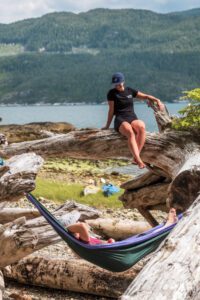
We debated camping at Jessie Falls but opted to paddle closer to Kitimat, landing at North Cove on the west side of Douglas Channel—just 7.5 km from MK Marina. We arrived just before dark, unloaded our kayaks onto the rocky shore, and waved goodbye to our water taxi.Morning brought calm seas, salty air, and a peaceful forest backdrop. We slipped back into our kayaks to check the buoy and were treated to a show—three bald eagles squabbling over a fish, a mink scouting our crab trap, and harbor seals peeking curiously from the water. Birds called from the treetops, seaweed popped underfoot, and the magic of the coast lingered in every moment.
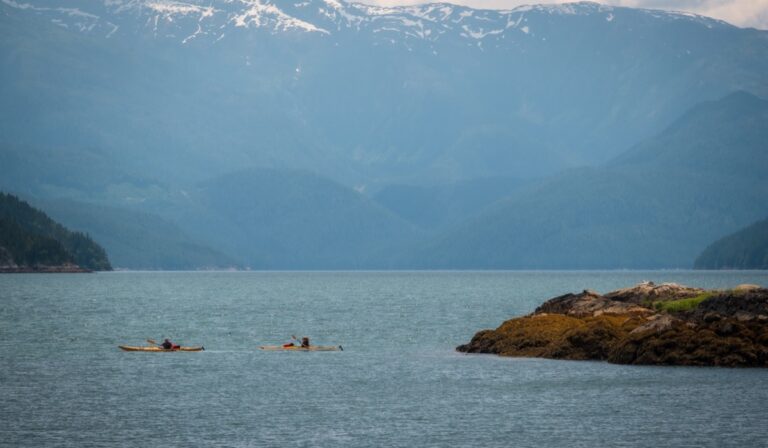
Day 3: Morning Activities and Return
The next morning we had the chance to fully appreciate our campsite. Enormous driftwood stumps and rocky outcrops lined the shoreline while towering Sitka Spruce and gigantic Hemlocks grew out of a soft carpet of conifer needles and moss among the picnic tables and tent pads. We were excited to check our trap so we paddled out and pulled it up. Unfortunately the only thing inside was the googly-eyed fish head so we resigned ourselves to a breakfast of granola and leftover sausages instead.
North Cove
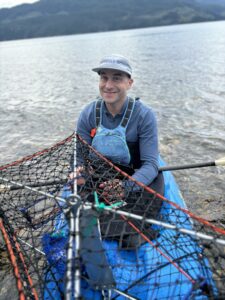
A morning paddle to check the crab trap turned into a wildlife spectacle—harbor seals popped up to spy on us, while three bald eagles battled mid-air over a fish. A sleek mink darted along driftwood, and rockweed snapped underfootlike bubble wrap. In the trees, Steller’s jays and ruby-crowned kinglets traded calls, wrapping the cove in pure coastal magic.
Paddle back to MK Bay Marina
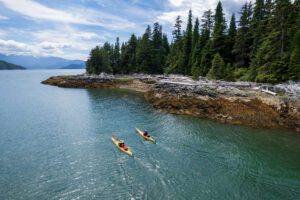
Our return paddle hugged the wild west shore of Douglas Channel, winding through hidden bays, rocky outcrops, and quiet beaches. We lingered in spots, exploring cliff walls and soaking in the afternoon light before crossing the inlet and making our way back to the marina.At one point, we drifted into a loose flock of seabirds, their calls echoing around us before they dipped underwater and disappeared down the channel. Having paddled mostly around Vancouver Island, it’s always striking how untouched and curious the wildlife feels up here—unfamiliar with kayaks, many animals paused to study us before gliding away.As we pulled into the marina, tired but exhilarated, we couldn’t help but smile—perfect weather, unreal scenery, and the kind of trip that already has us planning the next one.
Back to Two Peaks Brewery
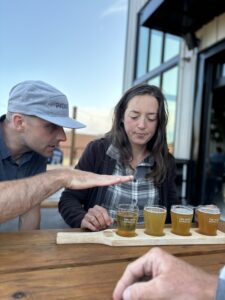
We returned to Two Peaks Brewing and grabbed a table on the sunny patio, enjoying the mountain views and the hum of local chatter all around. The menu was small but solid—think gourmet grilled cheese, soft pretzels, and shareable snacks made to pair with their house-brewed beers. We sipped cold pints, played a round of beer golf, and soaked in the laid-back Kitimat vibe. The perfect fuel for a day on (or off) the water.
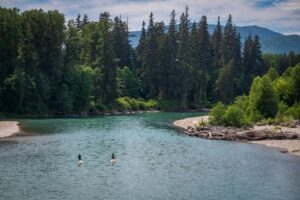
Kitimat River
The Kitimat River Meanders down from glaciers high up in the surrounding coastal mountains until it meets its estuary in the Douglas Channel. The Kitimat…
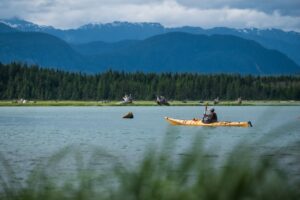
Minette Bay
On a calm, windless day, Minette Bay is the perfect place to launch your stand up paddle board for a day on the water. This…
Plan for a safe and well informed adventure
At Paddle BC, we’re as excited about your upcoming adventure as you are! Our goal is to help you experience the breathtaking beauty of British Columbia’s waterways, but we want to ensure you return home with only good memories. While we provide the gateway to these wild places, your safety is ultimately a personal commitment. We embrace a “challenge by choice” philosophy, which means you are the best judge of your own abilities. By staying within your skill set and taking personal responsibility for your journey, you ensure that your trip is as safe as it is spectacular. To help you prepare for a successful multiday adventure, we’ve outlined these six essential safety pillars:
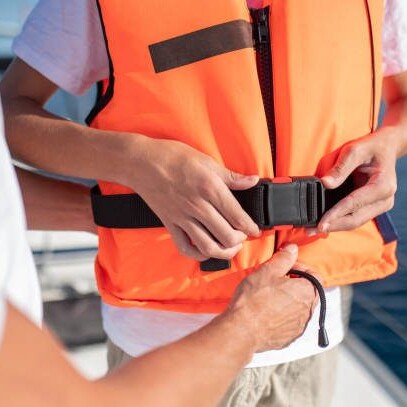
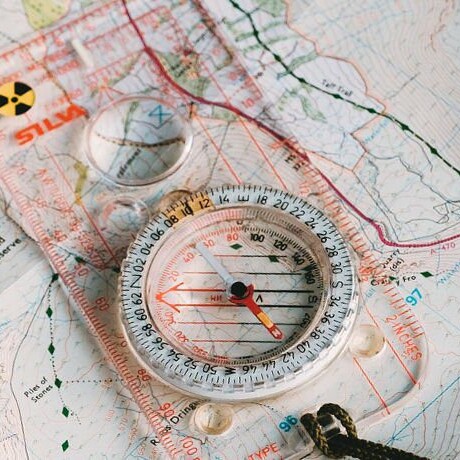
Carry Mandatory Gear
Ensure you have all Transport Canada required equipment: a lifejacket (PFD), throw bag, whistle, bailing device, and a reflective signaling device. This gear is your first line of defense.
Plan for Conditions
River levels and weather in BC change rapidly. Check forecasts regularly, be aware that many hazards may be hidden, and always have a solid contingency plan in place.
Respect Nature
Expect to encounter wildlife in the BC wilderness. Respect their space, protect the ecosystem, and strictly follow “Leave No Trace” principles to keep our waters pristine.
Dress for Immersion
Always “dress for the swim, not the paddle.” Use appropriate thermal layers to protect against cold water shock, which can occur instantly and lead to physical incapacitation.
Know Your Limits
Practice “challenge by choice” and never attempt water that exceeds your ability. Don’t let a multiday itinerary pressure you into paddling beyond your personal skill set.
Assess and Manage Risk
River paddling carries inherent risks like injury or entrapment. Remain vigilant, scout ahead when necessary, and remember that help may be far away during your adventure.